Return to the Cairngorms- September 2023
I come back regularly but this trip is special as the Strathspey Mountain Club is holding its 50th anniversary celebration. The club played an important part in my time up here. Members of the club provided me with important insights but also led to lasting friendships and many wonderful days on the hills in Scotland and elsewhere. Sadly, several club members have passed away in the past few years- George, Alan, Liz, Les. They will be missed.
I also caught up with other people in the book, like Mary Walker who is still walking despite suffering from osteoporosis. She won’t give up despite being into her eighties- an example to us all. Unfortunately I was not able to meet with Ross this trip as he had Covid. He has had some really exciting news- he has been awarded a Churchill Fellowship to research community initiatives in managing invasive plants in South East Asia and South East Europe. He is hoping to write a book which I am sure will be brilliant.
Cawdor Estate
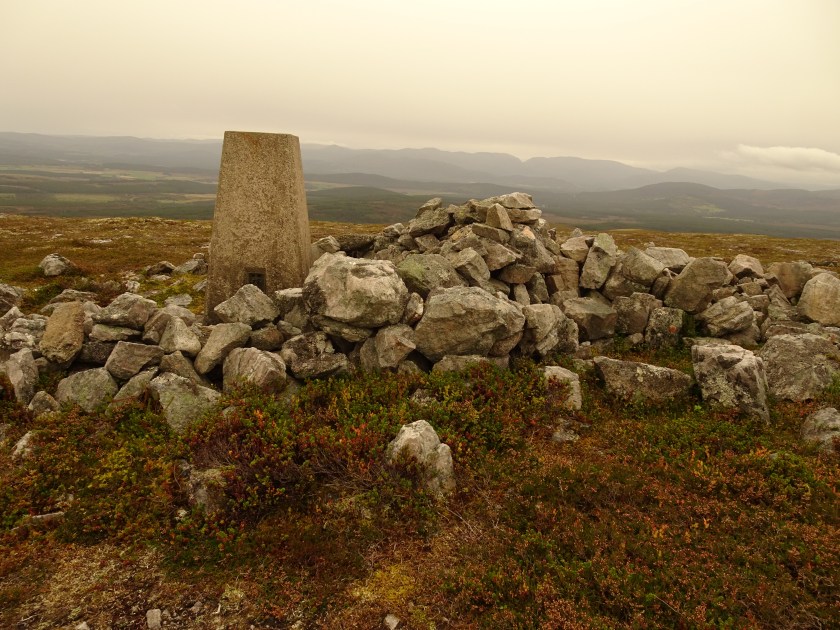
Despite the weather, I managed to get up a hill- a Graham (hills over 2000 ft). It was one I didn’t really know about despite going up most hills in the area. It shows how there is always something new to discover here. The hill lies at the southern end of the huge 17,000 hectares Cawdor Estate, which has origins going back to the 11th century.
My visit made me curious about this estate so began a trawl of the internet for more information. It was very difficult to find much so my post is limited. It seems that the Thanes of Cawdor got a hereditary peerage as a result of a close relationship with King Robert I (Robert the Bruce).
From the website: http://www.cawdorestate.co.uk
“The title ‘Thane of Calder’ (as they were previously called) dates back beyond the 11th Century. The real Macbeth was Thane of Calder before defeating King Duncan in 1040 and assuming the crown of Alba. The title was then passed to his brother, from whom the later Calders were all descended.
During the 12th Century the Thanes of Cawdor were important Celtic lords with jurisdiction over the county of Nairnshire (now part of Inverness-shire). The estate passed to the Clan Campbell in the 15th century when the Earl of Argyll had the child heiress, Muriella Calder, kidnapped and married to his son, Sir John Campbell.”
The Campbells, now Earls of Cawdor, then went on to accumulate land all over the place. It looks like the first Welsh estate in Pembrokeshire (Stackpole Court) was obtained through marriage in the 17th century when the 15th Earl of Cawdor married the daughter of Sir Gilbert Lort. She was not too keen on ‘north Britons’ so it seems the family ended up being based in south Wales, later accumulating land in north Wales.
“So the Campbells of Cawdor ceased to be merely Scottish landowners with estates in Nairnshire and Inverness-shire and control of the Isles of Islay and Jura, and became much more British in outlook, with substantially more profitable lands in Wales and in due course a home in London too. Thereafter the Campbells of Cawdor abandoned Cawdor Castle save for occasional visits and lived at Stackpole Court, which remained in the Campbell/Cawdor family for some 260 years until the 20th century.”(See: http://www.pembrokeshirehistoricalsociety.co.uk/the-cawdors-of-stackpole/).
So like the rest of the British aristocracy, the Cawdor’s/Campbell’s wealth and power extends all over the country and details are shrouded in secrecy. The estate is managed as a business with various subsidiary companies but one assumes they all belong to the Earl and make him a very wealthy man.
My walk took me through different landscapes, all sources of income. The start of the walk was through rich farmland in the strath. I soon started climbing and entered what looked like new woodlands. I was told that most of this is natural regeneration and the tree cover was most impressive. Fences had been put in place to make this possible. This is also a way to make money from environmental payments.
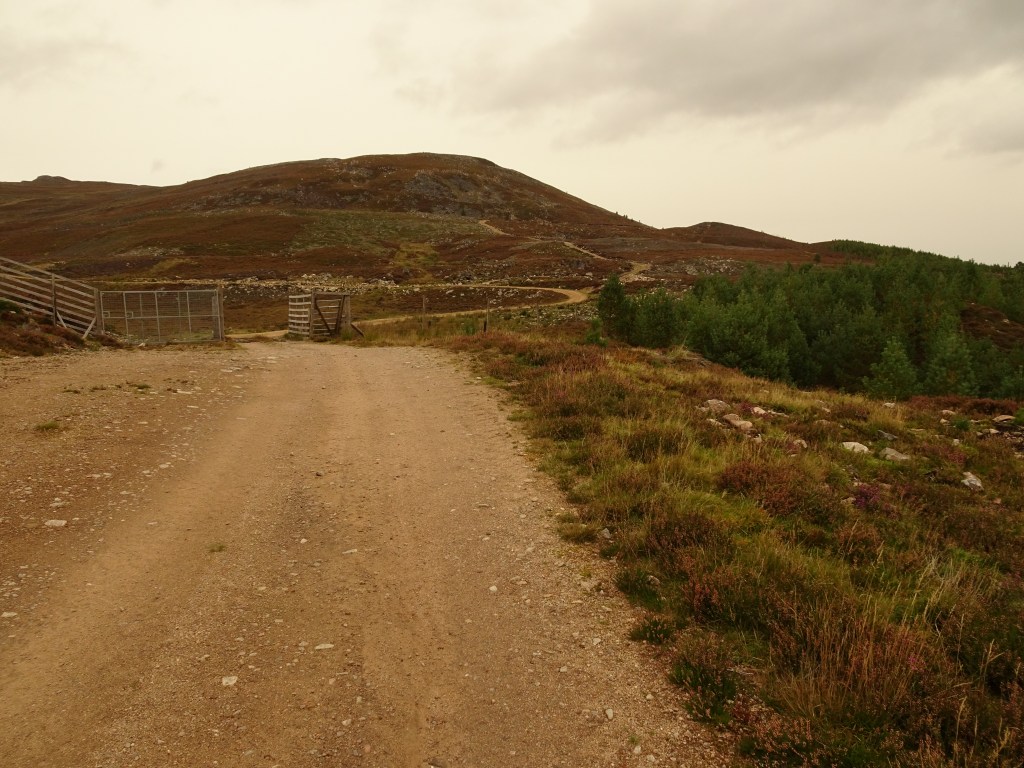
Once I crossed through the fence I reached open moorland and here I could see both sheep and evidence of grouse. The estate will get subsidies for the sheep and an income from shooting. I couldn’t complain at this point as I was benefitting from a track that took me more or less to the top of the hill! However, the green bothy, that had been frequently used by Strathspey Mountain Club members, had now been left to the sheep and club members told me how disappointed they were by this development. They used to go there on New Year’s Day and stop for refreshment. However, as the estate cannot charge walkers coming onto its land, it is not worth the upkeep.

When I got to the top of the hill, I could see a big windfarm development, also belonging to the estate (and the Earl).
Cawdor Estate extends to the coast and we can also find here evidence for money-making ventures. With the aim of ‘helping the community’ and ‘reviving Nairn’, the Earl and his stepmother have gained planning permission for a major housing development on the outskirts of Nairn.
The information on the estate website refers frequently to its aim of benefitting the local community. Maybe it does- but we can be sure that the Earl and his family benefit a lot more! What if it was put into community ownership?
 Land for What? Land for Whom?