Not sure why I didn’t post this at the time! Here is my report which I presented to the Community Land Academic Network (CLAN) at their April meeting. It was a fantastic event, very well-organised.
CLAN presentation
Who was there
Wide range of students from all over Scotland and even a Londoner! They are also doing a number of different courses, eg Wildlife and Conservation Management (used to be the gamekeepers and stalkers course), Environmental Science, Forestry, Outdoor Recreation and Tourism, and Archaeology. Some looked more alternative, others were wearing the traditional estate tweeds. Conference met its objectives of getting people to mingle, discuss and get to know people on different courses and with different perspectives.
The courses are developing skill sets that will see them into the future.
Introduction to conference- Su
- People have having different perspectives and values and needing to work together, listening and understanding different people’s views, and find common ground.
- The challenge is that people think in silos- conservation, forestry, and the aim is to break down these barriers early on in people’s careers.
- Land is a finite resource, needs to have multiple uses. There will be conflicts because we cannot accommodate all of those uses all of the time (eg windfarms vs landscape and biodiversity). So how can these conflicts be resolved?
- Interprofessional education.
Key Points
- Land management sector is in transiti0n- from one dominated by sporting estates to more general land management, focusing on a number of environmental objectives.
- The students seemed very motivated by the environmental arguments, this is why they wanted to work in this area. This is what has driven the need to work together. Importance of integrating the overarching aims of addressing climate change and biodiversity loss is central.
- Other things that have changed are that there is more technology available- so better data.
- Community engagement is more of a focus (one of the few mentions of this). A period of rapid change and uncertainty so complex, innovative and collaborative approaches are needed.
Deirdre Stewart: Durrell Wildlife Conservation Trust
- Land use change is being driven by social, economic and environmental factors. Many things are unfamiliar, eg Beavers. How do we promote change: incentivise or inhibit? People need to look beyond the four walls of an estate and think in terms of landscape-scale.
- So many conflicts: hen harriers vs burning heather. Policy tools may conflict with each other. We need to all be at the table to inform policy.
- Role of land manager is pivotal- link between people on the ground and landowner. Need to take people at the grass roots level with you, including the workers, respect them.
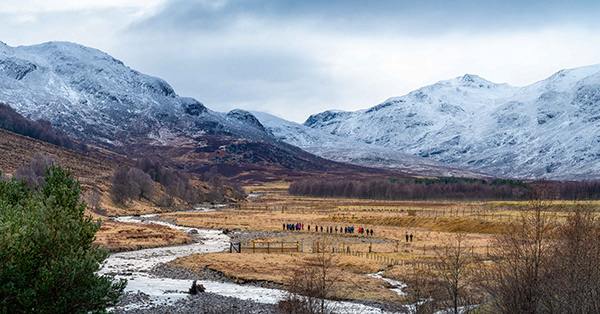
Visits to estates
The aim of the visits was to see an integrated approach in practice. The problem is that none of the landowners in the area are community: conservation organisation (RSPB), private conservation (Povlsen, Wildland Ltd), private traditional (Majid Jafar, CEO of Crescent Petroleum- world’s largest private oil and gas company, United Arab Emirates). Little information was given on the landowners. It seemed that it doesn’t matter what the form of ownership is, the work will be the same. Savills- one of the biggest real estate companies in the world, spoke at two of the sites. They are land agents at Glenbanchory.
The aim of all the visits was to show students the variety of work that takes place, focusing on the environment. The RSPB and Glen Feshie was all environment. Glenbanchor made a big effort to show us how important their environmental work is. However, the presenters stressed how this environmental work had no impact on the other work of the estate- grouse moors and deer stalking.
Community Land Ownership?
One session focused on the work of the Kingussie Development Trust. They own pockets of land around Kingussie. They had many interesting projects including a mini hydro one and an impressive path network which involved a number of people from the community.
However,
Interest does not extend far beyond the community boundaries. Behind Kingussie is the Pitmain Estate and next to that to the west the Glenbanchory Estate- all owned by the oil magnate and managed for sporting purposes. When asked, the presenters knew very little about what went on. So the community is effectively excluded from direct involvement in land beyond the villages.
Does it matter who the students work for?
- Focus was on the process of land management and collaborating with different perspectives within that sphere- not on who owns the land.
- Savills is heavily involved in all aspects of land management- though not so much with the conservation organisations
- Assumption, especially from Savills input, that traditional landowners can be great environmentalists- who needs land reform?
- Concern about the professionalization of land management such that experts make decisions and communities are left out. How does it work now in community buy-outs? They do need the expertise!
- Role play activity- facilitator set up a situation where the students were to work in groups to decide how to manage a catchment area. He first suggested a private landowner but students objected and it became a community landowner.
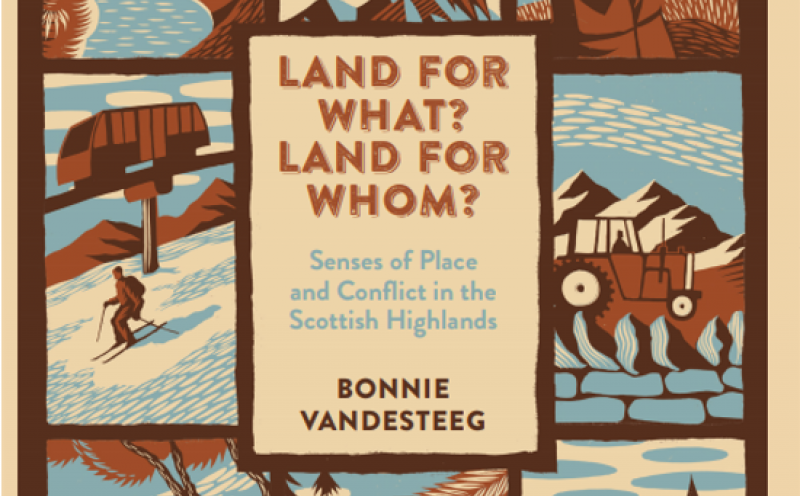
 Land for What? Land for Whom?